
Uncategorized

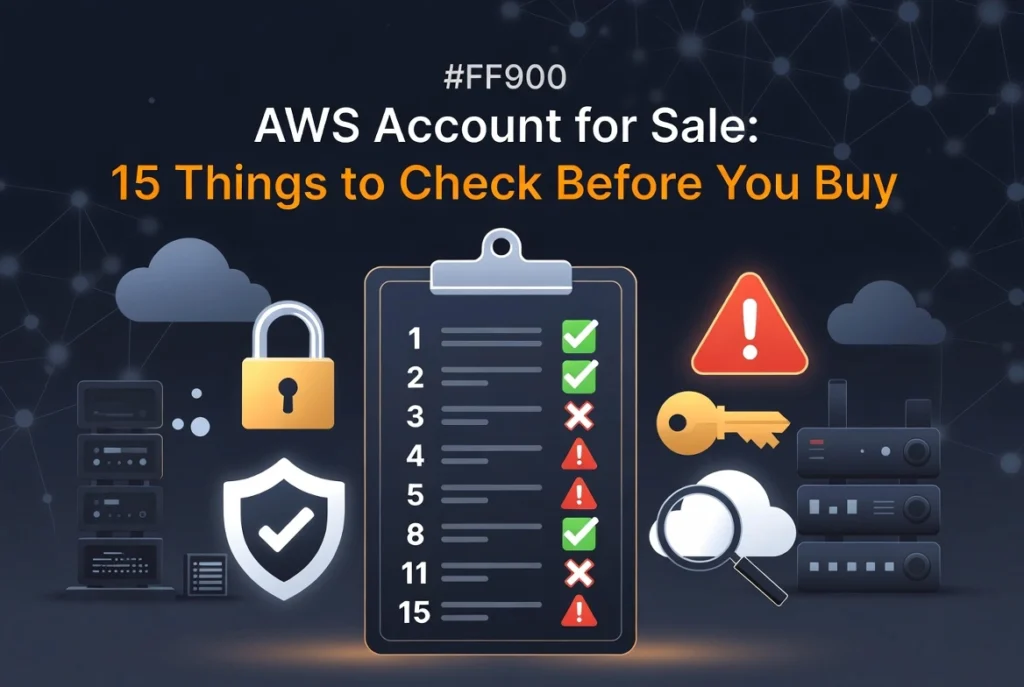
AWS Account for Sale: 15 Things to Check Before You Buy

AWS Account for Sale: 15 Things to Check Before You Buy

Buying an AWS account can save time and unlock aged infrastructure, but it carries real risks—from hidden billing debt to compromised security credentials. Before purchasing any available AWS accounts, verify account standing, service limits, IAM configurations, billing history, and compliance status to avoid costly surprises. Purchasing an existing AWS account sounds like a shortcut. Skip the setup, inherit established service limits, and get straight to deploying infrastructure. For developers, startups, and cloud engineers who need to move fast, it’s an appealing option. But available AWS accounts on the secondary market vary wildly in quality. Some are clean, well-maintained, and genuinely valuable. Others carry hidden debt, suspended services, or security vulnerabilities that can derail your operations—or worse, expose you to legal liability. This checklist covers the 15 most critical things to verify before handing over payment for any AWS account. Account Health and Standing 1. Is the AWS account in good standing with Amazon? Start here. An account that has been flagged, suspended, or placed under review by AWS is nearly worthless. Log in and check the AWS Health Dashboard for any active alerts or past suspensions. A previously suspended account may face tighter scrutiny from AWS trust and safety teams going forward. 2. Does the account have any outstanding billing balances? Unpaid invoices follow the account, not the seller. Request a full billing history for the past 12 months and confirm the balance is zero before transferring ownership. Any unpaid charges become your responsibility the moment the account changes hands. 3. Has the account ever violated AWS terms of service? This one is harder to verify externally, but it matters. Ask the seller directly and cross-reference any service restrictions you find during your audit. Accounts used for spam, crypto mining, or unauthorized scraping often carry lingering restrictions that aren’t immediately visible. Security and Access Controls 4. Are there any unrecognized IAM users, roles, or access keys? IAM (Identity and Access Management) misconfigurations are one of the most common security risks in second-hand AWS accounts. Pull a full IAM credential report and review every user, group, role, and policy. Delete anything that doesn’t belong, and rotate all access keys immediately after purchase. 5. Is MFA (Multi-Factor Authentication) enabled on the root account? The root account is the master key to everything. If MFA isn’t enabled—or if the seller can’t confirm it was active—treat that as a red flag. After acquiring the account, enabling MFA on the root account should be the first thing you do. 6. Have the root account credentials been transferred securely? Root credentials should never be shared over email or instant messaging. Insist on a secure credential transfer process, and change both the root email address and password immediately after the handover is complete. Service Limits and Region Configuration 7. What are the current service limits on the account? Aged AWS accounts often have elevated service limits—more EC2 instances, higher Lambda concurrency, increased S3 request rates—compared to newly created accounts. This is frequently cited as a key reason to buy an existing account. Verify these limits are genuinely in place by checking the Service Quotas dashboard before completing the purchase. 8. Which AWS regions are enabled on the account? Some regions require manual opt-in. Check which regions are currently active and whether that aligns with your intended deployment locations. Also confirm there are no region-specific restrictions or compliance flags attached to the account. 9. Are there any reserved instances or savings plans attached? Reserved Instances and Savings Plans represent pre-paid compute commitments. They can be valuable—or a liability if they cover services you don’t plan to use. Review all active reservations and their expiration dates before purchasing. Infrastructure and Resource Inventory 10. What active resources are running in the account? An account with running EC2 instances, RDS databases, or active load balancers will generate charges from day one. Request a full resource inventory, and verify it against the AWS Cost Explorer data. Any orphaned resources that weren’t mentioned by the seller are a sign of poor account hygiene. 11. Are there any active third-party marketplace subscriptions? AWS Marketplace subscriptions auto-renew and can carry significant monthly fees. Check the AWS Marketplace Subscriptions page for any active software agreements that would transfer with the account. 12. Does the account have any VPCs, subnets, or networking configurations in place? Pre-configured networking can be an asset, but it can also be a headache if the setup doesn’t match your architecture. Review all VPCs, security groups, and route tables. Pay particular attention to overly permissive security group rules—these are a common residue of poorly managed accounts. Compliance, Legal, and Organizational Considerations 13. Is the account part of an AWS Organization? Accounts nested inside an AWS Organization may have Service Control Policies (SCPs) applied to them that restrict what actions you can take. Before buying, confirm whether the account is a standalone account or a member of an organization—and if it’s the latter, understand exactly what restrictions are in effect. 14. Are there any compliance certifications or audit logs associated with the account? If you’re operating in a regulated industry—healthcare, finance, or government—you may need to demonstrate compliance with frameworks like HIPAA, SOC 2, or PCI DSS. An account with a clean CloudTrail history and established compliance posture can accelerate your audit readiness. Confirm that CloudTrail is enabled and that logs are stored securely. 15. Has the account been legally and legitimately obtained by the seller? This is the due diligence question that too many buyers skip. AWS’s terms of service prohibit the transfer of accounts in certain circumstances, and purchasing an account obtained through fraudulent means can result in immediate termination. Verify the seller’s identity, request proof of original account creation, and review any paperwork carefully before proceeding. Make Your Purchase with Confidence Available AWS accounts range from genuinely useful assets to ticking time bombs. The 15 checks above won’t guarantee a perfect purchase, but they will eliminate the most common—and most costly—risks. Work through each item methodically. Request documentation for anything

AWS Account for Sale: 15 Things to Check Before You Buy Read More »

verified AWS account

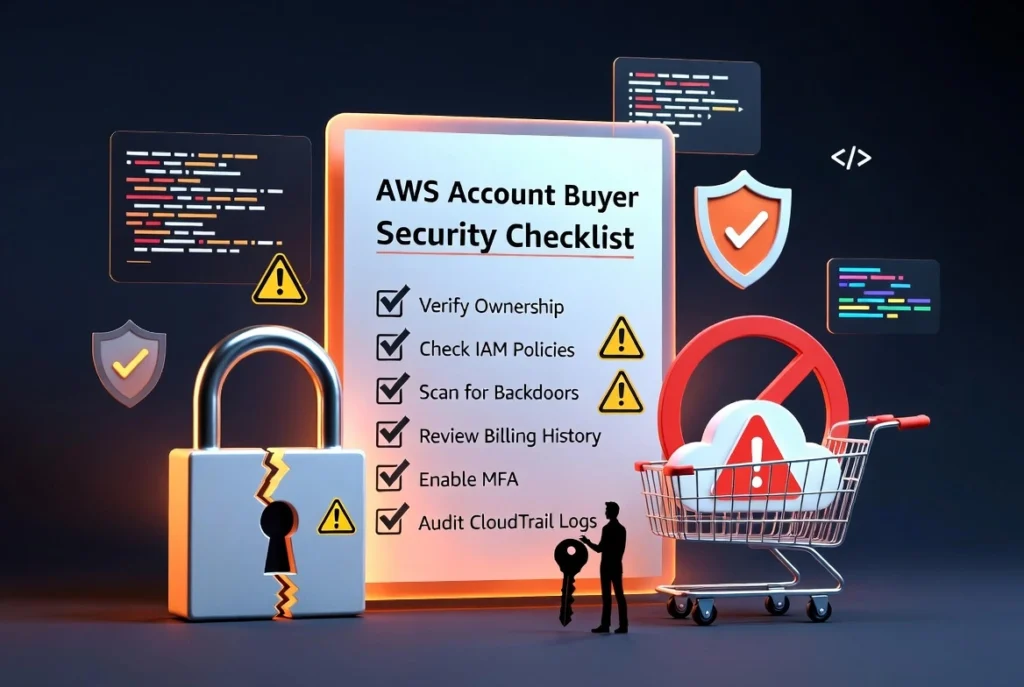
Is It Safe to Buy an AWS Account? A Security Checklist

Buying a pre-owned AWS account carries serious risks—including hidden billing liabilities, compromised credentials, and compliance violations. Verified AWS accounts with documented ownership history are safer, but buyers must still follow a rigorous security checklist before transferring funds or access credentials. The market for pre-owned cloud accounts is growing. Sellers on forums, marketplaces, and Telegram groups advertise verified AWS accounts with established billing histories, increased service limits, and bypassed identity verification steps. For startups chasing faster deployment or businesses blocked by AWS’s new account restrictions, the appeal is real. But so is the danger. Purchasing an AWS account from a third party isn’t like buying a used laptop. Cloud accounts carry invisible baggage—past configurations, hidden charges, compliance violations, and access credentials that may never be fully yours. Before you hand over money for a pre-owned account, you need to understand exactly what you’re buying into. This post breaks down the key security risks of buying AWS accounts, explains what makes a verified AWS account safer than an unverified one, and gives you a practical checklist to protect yourself if you decide to proceed. Key Security Risks When Buying Pre-Owned AWS Accounts Who Actually Controls the Account After Purchase? Account ownership on AWS is tied to the root email address and associated identity verification. When you purchase a third-party account, the seller controls that root identity—and there’s no formal AWS mechanism to transfer account ownership to a new person. Even if the seller hands over credentials, they may retain access through saved sessions, IAM users, or linked AWS Organizations. Without performing a full credential audit, you have no way of knowing whether you’re the only one with access. A malicious seller could reclaim the account, drain resources, or exfiltrate data at any point. Hidden Billing Liabilities You Won’t See Coming AWS billing is notoriously complex. Pre-owned accounts may carry: Unpaid invoices that AWS will charge to any linked payment method Reserved Instance commitments that lock you into 1- or 3-year payment terms Savings Plans with ongoing financial obligations Suspended services that resume billing upon reactivation AWS can suspend or permanently close an account with outstanding debt, taking your workloads offline with it. Before any purchase, request a full billing history and confirm the account has no outstanding charges or active financial commitments. The Account’s History Can Be Used Against You Pre-owned accounts don’t come with a clean slate. If the previous owner used the account to send spam, host malware, run unauthorized scraping bots, or violate AWS’s Acceptable Use Policy, that history follows the account. AWS monitors accounts for abusive behavior, and a flagged account may face service restrictions, reduced API limits, or permanent suspension—regardless of who owns it now. The IP ranges associated with that account may also appear on threat intelligence blocklists, which can affect your application’s deliverability, reputation, and access to third-party services. Compliance Violations You Inherit Without Knowing It Organizations operating under frameworks like HIPAA, PCI-DSS, SOC 2, or GDPR need to demonstrate a clean chain of custody for any infrastructure they use. A pre-owned AWS account may have processed regulated data—health records, payment information, or personal data from EU citizens—without the appropriate controls in place. If that historical activity surfaces during an audit, your organization could face regulatory penalties for violations you didn’t commit but technically hosted. Compliance teams should treat any pre-owned account as a liability until a full audit proves otherwise. Data Residue and Legacy Configurations That Create Security Gaps Previous owners leave traces. S3 buckets may contain old files. EC2 snapshots can preserve entire disk images from previous workloads. RDS instances may retain database backups. Security groups, IAM policies, and VPC configurations set up by previous users might create unintended access pathways into your infrastructure. A thorough configuration audit isn’t optional—it’s essential. Assuming the account is clean without verifying every service and region is one of the most common and costly mistakes buyers make. What Makes a Verified AWS Account Safer Than an Unverified One? Not all pre-owned accounts carry equal risk. Verified AWS accounts—those with documented identity verification, established billing history, and clear ownership records—reduce several of the risks above, but they don’t eliminate them entirely. Here’s what to look for when evaluating whether an account qualifies as genuinely verified: AWS root identity documentation: The seller should be able to provide proof that the account was created under a legitimate business or individual identity, including business registration or government-issued ID linked to the account’s root email. Billing history and payment records: A verified AWS account should have a clean billing history with no outstanding charges, no disputed payments, and no history of account suspension due to non-payment. Service limit history: Verified accounts often have elevated service limits as a result of legitimate, high-volume usage. Ask the seller to document how those limits were obtained and through which AWS services. IAM and access audit logs: Sellers of verified AWS accounts should be able to provide CloudTrail logs showing account activity. This lets you verify that the account was used for legitimate purposes and that no unauthorized users currently have access. No active AWS Organizations membership: Accounts that are part of an AWS Organization may have policies, SCPs (Service Control Policies), or billing arrangements that you cannot see or control. Confirm the account is a standalone account before purchasing. Security Checklist Before Buying a Pre-Owned AWS Account Run through each of these steps before finalizing any purchase: Request and review the last 12 months of billing statements Confirm there are no unpaid invoices, Reserved Instance commitments, or Savings Plans Ask for CloudTrail logs covering at least the past 6 months of account activity Verify the account is not part of an AWS Organization Confirm the root email address will be transferred to an email you fully control Change all IAM user passwords and access keys immediately upon transfer Enable MFA on the root account and all IAM users Audit all S3 buckets, EC2 snapshots, and RDS backups for residual data Review all existing security

Is It Safe to Buy an AWS Account? A Security Checklist Read More »

Microsoft Azure Consulting Services

What Are Microsoft Azure Consulting Services? A Complete Guide for Businesses in 2026

In today’s hyper-competitive digital landscape, businesses that fail to leverage cloud computing risk falling behind. Microsoft Azure — one of the world’s most powerful cloud platforms — is helping organizations across every industry modernize their infrastructure, scale on demand, and innovate faster. But harnessing Azure’s full potential isn’t always straightforward. That’s where Microsoft Azure consulting services come in. Whether you’re a startup migrating to the cloud for the first time or a large enterprise looking to optimize an existing Azure environment, professional consulting services can mean the difference between a smooth digital transformation and costly missteps. According to recent industry data, the global cloud consulting market is expected to surpass $70 billion by 2026 — and Microsoft Azure leads the charge as the cloud platform of choice for enterprise businesses worldwide. In this complete guide, we’ll walk you through everything you need to know about Microsoft Azure consulting services, including what they cover, how they’re priced, what certifications to look for, and how to choose the right partner for your business. What Are Microsoft Azure Consulting Services? Microsoft Azure consulting services refer to professional advisory, implementation, migration, and managed cloud services provided by certified Azure experts or Microsoft partner organizations. These services help businesses plan, deploy, optimize, and maintain workloads on the Microsoft Azure cloud platform. At their core, Azure consulting services bridge the gap between a business’s goals and the technical complexity of cloud infrastructure. A qualified Azure consultant assesses your existing IT environment, recommends the right Azure services for your specific needs, and guides your team through every stage of the cloud journey — from initial planning to full-scale deployment and ongoing support. Microsoft Azure consulting is not a one-size-fits-all solution. Services range from short-term assessments and architecture reviews to long-term managed services engagements. Businesses of all sizes — from SMBs to global enterprises — rely on Azure consultants to accelerate cloud adoption, reduce risk, and maximize return on investment. Why Businesses Are Moving to the Microsoft Azure Cloud Platform in 2026 The shift to cloud computing has accelerated dramatically, and Microsoft Azure has emerged as the platform of choice for organizations seeking a reliable, scalable, and secure cloud environment. Here are the key reasons businesses are choosing Azure in 2026: ⦁ Unmatched global infrastructure — Azure operates across 60+ regions worldwide, giving businesses low-latency access to compute power wherever their customers are located. ⦁ Industry-leading hybrid cloud capabilities — Azure’s seamless integration with on-premise environments via Azure Arc and Azure Stack makes it the preferred platform for enterprises with hybrid IT requirements. ⦁ Enterprise-grade security and compliance — Azure meets over 90 compliance certifications including GDPR, HIPAA, ISO 27001, and SOC 2, making it a top choice for regulated industries such as finance and healthcare. ⦁ Significant cost savings over on-premise infrastructure — Businesses report average savings of 30–50% by migrating legacy workloads to Azure compared to maintaining physical data centers. ⦁ Native AI and machine learning integration — Azure’s built-in AI services, including Azure OpenAI Service, Azure Machine Learning, and Cognitive Services, allow businesses to embed intelligence directly into their applications. ⦁ Seamless Microsoft ecosystem integration — Azure integrates natively with Microsoft 365, Dynamics 365, Teams, and other Microsoft products, reducing friction for businesses already in the Microsoft ecosystem. ⦁ Pay-as-you-go pricing flexibility — Azure’s consumption-based pricing model lets businesses scale their cloud spend up or down based on actual usage, eliminating wasted infrastructure costs. Core Microsoft Azure Services Every Business Should Know Microsoft Azure offers more than 200 products and services across multiple categories. Understanding the major service areas is essential before engaging a consulting partner. Here is an overview of the most business-critical Azure service categories: Compute Services Azure Virtual Machines (VMs), Azure Kubernetes Service (AKS), Azure App Service, and Azure Functions provide the compute power to run applications, workloads, and microservices at any scale. Storage and Databases Azure Blob Storage, Azure SQL Database, Azure Cosmos DB, and Azure Data Lake Storage offer flexible, highly available storage solutions for structured and unstructured data. Networking Azure Virtual Network, Azure Load Balancer, Azure CDN, and Azure VPN Gateway ensure secure, high-performance network connectivity across cloud and hybrid environments. Security and Identity Microsoft Entra ID (formerly Azure Active Directory), Microsoft Defender for Cloud, and Azure Key Vault provide robust identity management, threat protection, and secrets management. AI, Analytics, and DevOps Azure Synapse Analytics, Azure Machine Learning, Azure DevOps, and GitHub Actions on Azure empower data-driven decision-making and accelerate software development pipelines. What Does a Microsoft Azure Consulting Partner Actually Do for Your Business? Many businesses wonder what they’re actually paying for when they engage an Azure consulting firm. Here is a step-by-step breakdown of how a professional Azure consulting engagement typically unfolds: 1. Cloud Readiness Assessment — The consultant evaluates your current IT infrastructure, identifies workloads suitable for cloud migration, assesses security posture, and documents dependencies to create a baseline for planning. 2. Azure Architecture Design and Planning — Based on the assessment, the consulting team designs a cloud architecture tailored to your business requirements, including network topology, resource organization, governance policies, and disaster recovery planning. 3. Migration Strategy and Execution — The consultant develops a phased migration roadmap, selecting the right migration approach (lift-and-shift, re-platform, or re-architect) for each workload and executing the migration with minimal business disruption. 4. Security Configuration and Compliance Mapping — Azure environments are secured with role-based access control (RBAC), network security groups (NSGs), encryption policies, and compliance frameworks aligned to your industry requirements. 5. Cost Management and FinOps Optimization — The consulting team implements Azure Cost Management tools, right-sizes resources, sets up budget alerts, and identifies Reserved Instance opportunities to reduce cloud spend. 6. Performance Monitoring and Ongoing Optimization — Post-deployment, consultants configure Azure Monitor, Application Insights, and log analytics to ensure performance, availability, and security are continuously maintained. 7. Training and Knowledge Transfer — A reputable Azure consulting partner ensures your internal team is trained on the deployed architecture, enabling long-term self-sufficiency and reducing dependency on external support. Microsoft

What Are Microsoft Azure Consulting Services? A Complete Guide for Businesses in 2026 Read More »